
What’s in this guide
- Side-by-Side Comparison
- Callaway Rogue ST Max OS — Best Overall
- TaylorMade Stealth HD Irons
- Cleveland Launcher XL Halo Irons — Most Forgiving
- Cobra Air X Irons — Best for Seniors and Slower Swings
- Wilson D9 Irons — Best Value Mid-Range
- Ping G440 Irons — Premium Forgiveness
- Mizuno JPX925 Hot Metal Irons — Best Feel in Game Improvement
- Tour Edge Hot Launch C522 — Best Value Hollow Body
- Buying Guide & FAQ
Quick Picks: Best Beginner Golf Irons 2026
- Best Overall Callaway Rogue ST Max OS — Hollow body speed with maximum game-improvement forgiveness
- Most Forgiving Cleveland Launcher XL Halo — Widest sole, easiest launch in the group
- Best Value Tour Edge Hot Launch C522 — Hollow body tech at a budget price
- Best Brand Name TaylorMade Stealth HD — Speed Pocket forgiveness with TM pedigree
- Best Lightweight Cobra Air X — Ultra-light graphite for seniors and slower swing speeds
Table of Contents
The right irons can make the difference between a beginner who sticks with golf and one who quits after a frustrating summer. I’ve seen it happen too many times — a new golfer buys the wrong irons (too stiff, too heavy, too little offset), hits thin and chunked shots round after round, and concludes they’re not meant for golf. The instructors in the GrumpyGopher network will tell you the same thing: the equipment matters at the beginning, especially for irons. These eight sets cover every budget from value to premium, all built around the forgiveness features that beginners need.
Comparison Table
| Iron Set | Construction | Sole Width | Offset | Shaft Options | Set Config | Price Range | Buy |
|---|---|---|---|---|---|---|---|
| Callaway Rogue ST Max OS | Hollow body | Very Wide | High | Graphite/Steel | 5-PW, AW | $600–$800 | View Deal |
| TaylorMade Stealth HD | Speed Pocket cavity | Wide | High | Graphite/Steel | 5-PW, AW | $500–$700 | View Deal |
| Cleveland Launcher XL Halo | Hollow body ultra-wide | Widest | Highest | Graphite | 5-PW, GW | $500–$700 | View Deal |
| Cobra Air X | Hollow body lightweight | Wide | High | Ultra-light graphite | 5-GW | $450–$600 | View Deal |
| Wilson D9 | Cavity back | Wide | Moderate | Graphite/Steel | 5-GW | $400–$550 | View Deal |
| Ping G440 | Cavity back, face insert | Wide | Moderate-High | Steel/Graphite | 5-UW | $800–$1,100 | View Deal |
| Mizuno JPX925 Hot Metal | Hollow body (Chromoly) | Wide | Moderate | Steel/Graphite | 5-GW | $600–$800 | View Deal |
| Tour Edge Hot Launch C522 | Hollow body | Wide | High | Steel/Graphite | 4-PW | $300–$450 | View Deal |
Callaway Rogue ST Max OS

- Construction: Hollow body with Tungsten Speedcartridge
- Face: 360 Face Cup (variable thickness)
- Sole: Very wide, designed for turf interaction
- Offset: High (max game improvement)
- Shafts: Graphite (recommended for beginners), steel available
- Price: $600–$800 for set
The Callaway Rogue ST Max OS is Callaway’s most forgiving iron, and in a range that includes excellent game-improvement designs, that’s meaningful. The OS (Oversize) version of the Rogue ST Max takes the hollow body construction, 360 Face Cup technology, and tungsten weighting and applies it to a larger head with more offset and a wider sole. The result is an iron that generates impressive ball speed across a very large effective hitting area — mishits that would produce short, wayward shots with less forgiving irons still produce decent results with the Max OS.
The Tungsten Speedcartridge is Callaway’s method of moving weight low and to the perimeter of the head, which raises launch angle and increases MOI simultaneously. For beginners who struggle to get the ball consistently airborne, this design addresses both issues at once. The 360 Face Cup flexes at impact to maintain ball speed even on off-center strikes — technology from Callaway’s Epic and Rogue driver lines adapted into iron form. The result is distance and forgiveness that far exceeds what the iron’s appearance suggests.
At $600-$800 for a full set, the Rogue ST Max OS isn’t the budget option, but it’s positioned well against its premium competitors when you consider the technology depth. These are irons that will serve a beginner well through the first several years of improvement — you won’t outgrow them until you’re consistently shooting in the high 70s, which is further than most beginners expect to progress quickly.
TaylorMade Stealth HD Irons
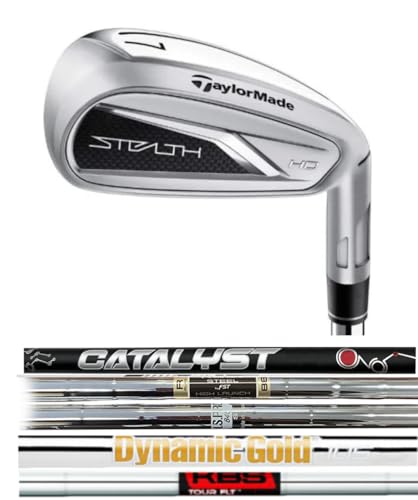
- Construction: Speed Pocket, cavity back
- Face Technology: Speed Pocket with Inverted Cone
- Sole: Wide, progressive
- Offset: High (HD version)
- Price: $500–$700 for set
TaylorMade’s Stealth HD (High Draw) irons are engineered to help golfers who fight a slice by promoting a right-to-left ball flight. The HD configuration moves weight to the heel side of each iron head, promoting face rotation through impact that encourages a draw rather than a fade or slice. For the large percentage of beginners who battle a chronic slice, this design provides built-in correction. The Speed Pocket slot in the sole increases face flex at impact for more consistent ball speed across the face, technology that TaylorMade has refined through multiple generations.
The feel at impact is solid for a game-improvement iron — the Speed Pocket construction dampens vibration while maintaining enough feedback to let you know when you’ve found the sweet spot. High offset keeps the face square through the impact zone for golfers who struggle with an open face at impact. Combined with the heel-weighted draw bias, this is one of the most slice-fighting iron designs available at this price tier.
Who it’s not for: golfers who already hit a draw or hook. The HD design will exacerbate right-to-left movement for players who don’t need the correction. Also, as your technique improves and the slice diminishes, you may find the draw bias becomes less useful or even counterproductive. But for the majority of beginning male golfers who fight a left-to-right ball flight, the Stealth HD provides meaningful, built-in help.
Cleveland Launcher XL Halo Irons

- Construction: Hollow body, ultra-wide sole (widest in guide)
- Face: MainFrame variable thickness
- Sole: Halo sole design — widest bounce and sole width
- Offset: Highest in the group
- Price: $500–$700 for set
The Cleveland Launcher XL Halo irons have one obsessive design goal: stop the leading edge from digging into the turf. The Halo sole is wider than any other iron in this comparison — it creates a cushion of metal behind the leading edge that prevents the fat-shot disaster (the chunked iron that travels 40 yards) from happening as catastrophically. For beginners who are just learning the downward strike motion that produces good iron contact, the Halo sole is like having training wheels built into the club. Bad shots still happen, but they’re survivable.
The hollow body construction distributes weight to the perimeter and creates a Turbocharged Face Cup effect that maintains ball speed even on the mishits that still get through. The MainFrame face milling optimizes face thickness for consistent flex. The highest offset in this comparison gives beginners maximum help squaring the face through impact. This is the most complete forgiveness package of any set in our guide.
The trade-off is feel — hollow body, ultra-wide sole irons feel softer and less crisp than cavity-back designs like the Wilson D9 or Ping G440. Some golfers love the soft, muted response; others find it harder to develop feel for impact quality. And the extreme forgiveness design means the Launcher XL Halo will feel limiting sooner than less forgiving irons as your technique develops. But for the first year or two of golf, these are the irons that make the game most enjoyable by keeping mishits in play.
Cobra Air X Irons

- Construction: Hollow body, ultra-lightweight
- Key Feature: Ultra-light shaft (under 50g) for maximum speed
- Sole: Wide, progressive
- Best For: Swing speeds under 80 mph, seniors, women
- Price: $450–$600 for set
The Cobra Air X is designed around one core insight: for golfers with slower swing speeds, lighter equipment creates more swing speed, and more swing speed creates more distance. The Air X achieves dramatic weight reduction through its ultra-light graphite shafts (FST Ultralite at under 50 grams) and lightweight head construction without sacrificing the forgiveness features beginners need. The result is an iron set that lets seniors, women, and slower-swing beginners generate ball speeds they can’t achieve with heavier equipment.
Beyond the lightweight construction, the hollow body design and wide sole deliver the forgiveness that marks this as a genuine game-improvement iron, not just a lightweight novelty. The offset is meaningful. The sole prevents dig on fat shots. The launch angle is high and forgiving. For a golfer who has struggled with getting distance and height simultaneously — which describes most slower-swing beginners — the Air X addresses both issues through its weight optimization.
Standard-weight players who already generate reasonable swing speed won’t need the Air X’s weight advantage. For players with good swing speed, the ultra-light shafts may feel whippy and imprecise. The Air X earns its spot through laser-focused design for a specific need: golfers who are leaving distance on the table due to swing speed limitations. For that audience, it’s the best option in the guide.
Wilson D9 Irons

- Construction: Cavity back with power holes
- Face Technology: Power Holes for perimeter speed
- Sole: Wide, with progressive width
- Price: $400–$550 for set
Wilson’s D9 irons are quietly excellent — a game-improvement design that delivers real performance at a price point below the major-brand competition. The Power Holes in the perimeter of each iron head increase ball speed on off-center hits in a manner similar to Callaway’s Face Cup technology, just at a different price point. Wilson engineers the D9 with a progressive sole width — wider on the longer irons where turf interaction is most problematic, narrower in the scoring irons where precision matters more. This progressive design means the same set serves you well through the full bag.
The cavity-back construction delivers feedback that hollow body irons sacrifice for forgiveness. Golfers who are past the complete beginner stage and want to start developing feel for iron strikes will find the D9 communicates impact quality more clearly than the Launcher XL or Rogue Max OS. It’s a good “next step” iron for players who started with a complete beginner set and want to upgrade to dedicated game-improvement irons with more feel feedback.
At $400-$550, the Wilson D9 delivers technology depth that punches above its price. Wilson’s brand doesn’t carry the premium perception of Callaway or TaylorMade, which is why they can offer better-priced equipment without cutting corners on the technology inside it. For value-conscious buyers who want genuine forgiveness and real distance from their beginner irons, the D9 is a strong choice.
Ping G440 Irons
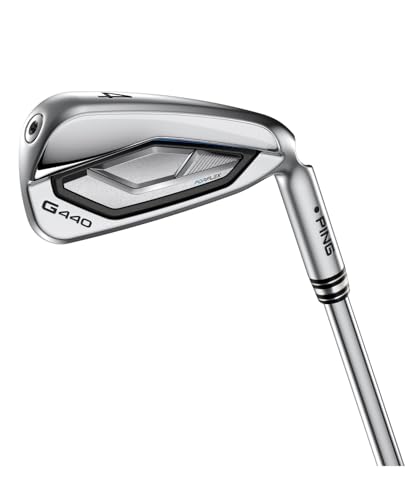
- Construction: Cavity back with elastomer badge
- Face Insert: Steel maraging face insert for speed
- Sole: Wide, textured for turf interaction
- Price: $800–$1,100 for set
The Ping G440 irons sit at the premium end of the game-improvement category — these are excellent, well-engineered clubs that Ping backs with their excellent fitting program and a history of building some of the most consistently reliable irons in the industry. The maraging steel face insert provides a hot, fast face that maintains ball speed across a large area. The elastomer badge behind the face dampens vibration for a clean, solid feel that belies the forgiveness engineering underneath. Ping G-series irons have been consistently excellent for two decades; the G440 continues that tradition.
The Ping fitting process is worth calling out. Ping offers a comprehensive color-coding system for lie angle adjustment, and their fitters are some of the best in the industry at matching equipment to individual golfers. The G440 irons are available with lie angle adjustment built into the purchase process, which means you’re more likely to get clubs that are actually fitted to your swing — a significant advantage over off-the-rack alternatives.
The price is the honest limiting factor. At $800-$1,100, the G440 costs significantly more than several excellent competitors in this guide. The quality justifies the cost, but beginning golfers who aren’t certain they’ll commit long-term to the game should start with a less expensive option and upgrade to a Ping fitting session once they’ve confirmed the dedication. For players who know they’re serious and want equipment that fits them properly, Ping G440 is worth every dollar.
Mizuno JPX925 Hot Metal Irons

- Construction: Hollow body chromoly (HT1770M)
- Key Tech: Chromoly steel for thinner, faster faces
- Feel: Exceptional for a game-improvement iron
- Best For: Mid-handicappers who want feel + forgiveness
- Price: $600–$800 for set
Mizuno is renowned for iron feel — their forged players irons set the standard for what “feels like butter” means in golf equipment. The JPX925 Hot Metal brings Mizuno’s feel obsession to a hollow body game-improvement design through the use of HT1770M chromoly steel, which is strong enough to be made extremely thin, which in turn produces both speed and a distinctive feel that game-improvement irons don’t usually offer. Golfers who upgrade from the JPX925 Hot Metal to a forged Mizuno players iron often report the transition feels natural — the feel language is consistent across the lineup.
The hollow body construction gives you the forgiveness and distance you need as a beginner or high-handicapper, while the chromoly face and Mizuno’s engineering deliver a strike feedback that helps you actually feel when you’ve hit it well versus poorly. That feedback loop — which softer, more muted hollow body irons sacrifice — is valuable for learning what a good iron strike actually feels like. The JPX925 Hot Metal is the iron I’d recommend to a beginner who cares about developing feel alongside forgiveness.
They’re not quite as forgiving as the Cleveland Launcher XL Halo or Callaway Rogue Max OS on extreme mishits — Mizuno didn’t compromise the feel character to maximize forgiveness at all costs. But they’re plenty forgiving for most beginners and early-intermediate players. For golfers who take the game seriously and want equipment they won’t feel embarrassed using as their handicap drops, the JPX925 Hot Metal grows with you.
Tour Edge Hot Launch C522

- Construction: Hollow body with C-cup face
- Face Technology: C-cup (360-degree) face for perimeter speed
- Sole: Wide speed pocket sole
- Price: $300–$450 for set
Tour Edge’s Hot Launch C522 irons do something that almost no other hollow body iron can claim: they deliver hollow body game-improvement technology for the price of a standard cavity-back set. The C-cup face design (similar in concept to Callaway’s Face Cup) creates a wrap-around face that flexes at impact to maintain ball speed across the entire face area, not just the center. The speed pocket sole creates additional face flex through impact. For the price, the distance performance from these irons is genuinely impressive — they compete with irons costing $200 more.
Tour Edge isn’t a household name on social media, but the company has been building quality value-priced equipment for decades. Their engineering team produces designs that would be priced much higher if attached to a more famous brand logo. The C522 irons are a prime example — the technology inside the head competes directly with Cleveland and Callaway designs that cost significantly more. Golfers who prioritize performance per dollar over brand prestige will find the C522 extremely satisfying.
The honest limitation is feel — the C522 produces a softer, more muted response at impact than premium hollow body designs from Callaway or Mizuno. And the broader game-improvement market will note this set is a few years old, meaning it can often be found discounted further than its already-accessible MSRP. For a beginner who wants hollow body forgiveness without spending $600+, the Tour Edge Hot Launch C522 is the clear value winner in this guide.
Buyer’s Guide: What to Look for in Beginner Golf Irons
1. Prioritize Forgiveness Over Feel
The single most important feature in beginner irons is forgiveness — the ability to produce acceptable results on mishits. Every beginner mishits constantly. Wide soles prevent digging on fat shots. High offset helps square the face through impact, reducing slices. Hollow body or cavity-back construction distributes weight to the perimeter, maintaining ball speed and direction on off-center hits. Large sweet spots catch more of your shots in the functional zone. Don’t sacrifice forgiveness for feel, prestige, or aesthetics as a beginner — prioritize it above everything else.
2. Choose the Right Shaft Flex
Shaft flex is one of the most impactful fitting variables, especially for beginners. A shaft that’s too stiff for your swing speed produces low, weak shots and can cause a slice. Too flexible produces a balloon ball flight and inconsistent direction. The general guideline: swing speeds under 75 mph with a driver = ladies or senior flex; 75-85 mph = senior or regular flex; 85-95 mph = regular flex; 95-105 mph = stiff flex; above 105 mph = X-stiff. Most beginners fall in the regular flex category. When in doubt, go one flex softer rather than one stiffer — a shaft that’s slightly too flexible is more forgiving than one that’s too stiff.
3. Consider Graphite vs Steel
For most beginners, graphite shafts are the better choice. They’re lighter (60-80 grams vs 100-120 grams for steel), which helps slower-swing beginners generate more clubhead speed. They absorb more vibration from mishits, reducing the unpleasant sting of a poorly-struck iron. They also tend to produce higher launch angles, which helps beginners who struggle to get the ball airborne. Steel shafts provide more feedback and consistency for players with faster, more repeatable swings — but most beginners haven’t developed those qualities yet.
4. Don’t Buy Long Irons — Buy Hybrids Instead
Modern iron set configurations have moved away from the 2-iron, 3-iron, and 4-iron for good reason: they’re extremely difficult to hit consistently for most golfers, and hybrids covering the same distances are dramatically more forgiving. Configure your iron set starting at the 5-iron or 6-iron, and use hybrids for the longer shots. All of the sets in this guide except the Ping G440 and Tour Edge C522 start at the 5-iron; that’s the right starting point for most beginners. The 3 and 4 hybrids that replace the long irons will be your friends.
The Cleveland Launcher XL Halo irons are the most forgiving in this guide — ultra-wide hollow body construction with the Halo sole design. The Callaway Rogue ST Max OS and Cobra Air X are close behind. All three feature maximum game-improvement designs with large sweet spots, offset hosels, and wide soles that help beginners get the ball airborne.
Most beginners benefit from graphite shafts. Graphite is lighter, helps generate swing speed, and absorbs more vibration from mishits. If your driver swing speed is under 85 mph, graphite is the better choice. Steel shafts become more appropriate as your swing develops consistency and speed.
Most beginners should start with a 5-iron or 6-iron through pitching wedge, replacing the 3 and 4 irons with hybrids. Long irons are much harder to hit consistently than hybrids at the same distances. Most good beginner iron sets configure correctly with a 5 or 6-iron as the longest iron.
A quality beginner iron set costs $300–$700. The Tour Edge Hot Launch C522 and Wilson D9 offer excellent value under $500. The Callaway Rogue ST Max OS and Cleveland Launcher XL Halo run $500–$700 for the full set. Don’t spend over $800 on irons as a beginner — invest the difference in lessons.
Offset means the face is set back slightly behind the hosel. This gives your hands a head start in returning the face to square at impact, which reduces the slice that plagues most beginner golfers. Higher offset is more forgiving for beginners; lower offset allows more workability for advanced players.
Consider upgrading when you’re consistently shooting in the low 80s, your ball striking is reliable enough to benefit from feedback, and you want to start working the ball intentionally. Most golfers should stay in game-improvement irons until they reach a 15 handicap or lower. There’s no shame in game-improvement at any skill level — plenty of professional-level junior coaches play them.
Frequently Asked Questions
What are the most forgiving golf irons for beginners?
Should beginners use graphite or steel shafts in irons?
What iron set number should beginners start with?
How much should I spend on beginner golf irons?
What does ‘offset’ mean in golf irons and why does it help beginners?
When should a beginner upgrade from game-improvement to players irons?