
Our Top Picks at a Glance
What’s in this guide
- Why Compression Matters for Slow Swing Speeds
- Side-by-Side Comparison
- Callaway Supersoft — Best Overall
- Wilson Duo Soft+ — Lowest Compression
- Srixon Soft Feel — Best All-Around
- TaylorMade Soft Response — Best for Distance
- Titleist TruFeel — Best Brand Name
- Bridgestone e12 Contact — Best for Straighter Shots
- Pinnacle Soft — Best Budget
- How to Choose the Right Ball
-
Compare all 30 balls visually on our Interactive Compression Chart.
Frequently Asked Questions
Here’s a truth most golf ball marketing ignores: if your driver swing speed is under 85 mph, you are physically unable to compress a Pro V1 the way it was designed to be compressed. You’re not getting the performance those tour-level balls promise. You’re just spending more money to hit it the same distance — or shorter — than a ball designed for your swing.
Low compression golf balls exist to solve this exact problem. They’re engineered to fully compress at slower swing speeds, which means you get maximum energy transfer, higher launch, and more distance from the same swing. After researching the current market and cross-referencing compression data, here are the 7 best golf balls for slow swing speeds in 2026.
Why Compression Matters for Slow Swing Speeds
Golf ball compression is measured on a scale from roughly 30 to 110+. The number represents how much force is needed to deform (compress) the ball at impact. A low compression ball (30-60) deforms more easily. A high compression ball (90-110) requires more force.
When you compress a golf ball properly, the core stores energy and releases it as the ball leaves the clubface. If your swing speed is too slow to fully compress a high-compression ball, that energy transfer is incomplete. You’re essentially leaving distance on the table.
Here’s a rough guide:
- Under 75 mph driver speed: Play a ball with compression 40 or below
- 75–85 mph driver speed: Play a ball with compression 40–65
- 85–95 mph driver speed: Play a ball with compression 60–80
- 95+ mph driver speed: Play a ball with compression 80+
Most seniors, many women golfers, and a lot of beginners fall in the under-85 mph range. If that’s you, a low compression ball is one of the easiest and cheapest equipment changes you can make to gain distance. For a deeper dive into the numbers, check out our Golf Ball Compression Chart.
Side-by-Side Comparison
| Ball | Compression | Pieces | Cover | Price/doz | Best For | |
|---|---|---|---|---|---|---|
| Callaway Supersoft Best Overall | ~35 | 2 | Ionomer | ~$25 | Overall performance | View |
| Wilson Duo Soft+ Lowest Compression | ~29 | 2 | Ionomer | ~$23 | Slowest swing speeds | View |
| Srixon Soft Feel | ~60 | 2 | Ionomer | ~$23 | All-around play | View |
| TaylorMade Soft Response | ~50 | 2 | Ionomer | ~$25 | Maximum distance | View |
| Titleist TruFeel | ~45 | 2 | Ionomer | ~$24 | Consistency & feel | View |
| Bridgestone e12 Contact | ~50 | 3 | Surlyn | ~$28 | Straighter ball flight | View |
| Pinnacle Soft Best Budget | ~50 | 2 | Ionomer | ~$18 | Budget-friendly | View |
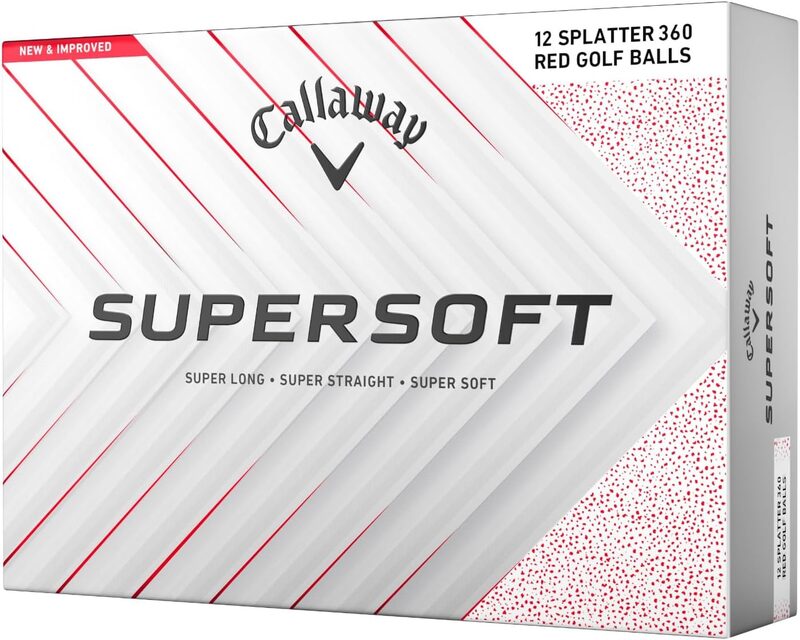
Callaway Supersoft
The best-selling low compression golf ball on the planet, and it earned that title. Ultra-soft feel with surprisingly good distance.
~$25/dozen
There’s a reason the Callaway Supersoft has been the #1 selling golf ball on Amazon for years running. At roughly 35 compression, it’s one of the softest balls you can buy. The ultra-low compression core generates high launch with low spin off the driver — exactly what slow swing speed golfers need to maximize carry distance.
The Supersoft uses Callaway’s HEX Aerodynamic dimple pattern, which is designed to reduce drag and promote a stable, penetrating flight even at lower speeds. In real-world terms, this means your drives hold their line better in crosswinds than many competing soft balls that tend to balloon.
Around the greens, the Supersoft feels buttery on chips and pitches. It won’t generate tour-level spin (that’s a trade-off of the soft ionomer cover), but it checks up enough for most recreational players. If you’re losing balls regularly and wincing at $45/dozen for Pro V1s, the Supersoft at $25 is a revelation.
Pros
- Ultra-low 35 compression — perfect for swing speeds under 85 mph
- Excellent distance off the tee for a soft ball
- Satisfying soft feel on all shots
- Available in matte colors for easy visibility
- Best-in-class price-to-performance ratio
Cons
- Limited greenside spin compared to urethane balls
- 2-piece construction lacks the feel nuance of 3+ piece balls
- May feel “mushy” to golfers who prefer a firmer impact
Wilson Duo Soft+ (2025)
At 29 compression, this is the softest golf ball on the market. If you have the slowest swing in your foursome, this is your ball.
~$23/dozen
The Wilson Duo Soft+ holds the crown for the lowest compression golf ball on the market at just 29. That means even the gentlest swing will fully compress this core. For seniors, beginners, and anyone with a driver swing speed under 75 mph, this is a game-changer.
Wilson redesigned the Duo Soft+ for 2025 with a slightly firmer feel off the putter face compared to previous generations — a common complaint that they listened to. The ball still launches high and soft off the driver, but now putting feel is improved without sacrificing the compression benefits.
The low-drag dimple pattern helps the Duo Soft+ hold its line in the air, though in strong wind, the ultra-light feel can cause it to get knocked around more than a firmer ball. On calm days, the distance gains compared to a high-compression ball are real and measurable — expect to pick up 8-15 yards off the tee if you’re currently playing a ball that’s too hard for your swing.
Pros
- Lowest compression on the market (29) — compresses with any swing speed
- Improved putting feel in the 2025 model
- High launch for maximum carry distance
- Excellent value at ~$23/dozen
- Available in white and high-visibility yellow
Cons
- Can feel too soft for some players
- Vulnerable to wind at very low swing speeds
- Minimal greenside spin
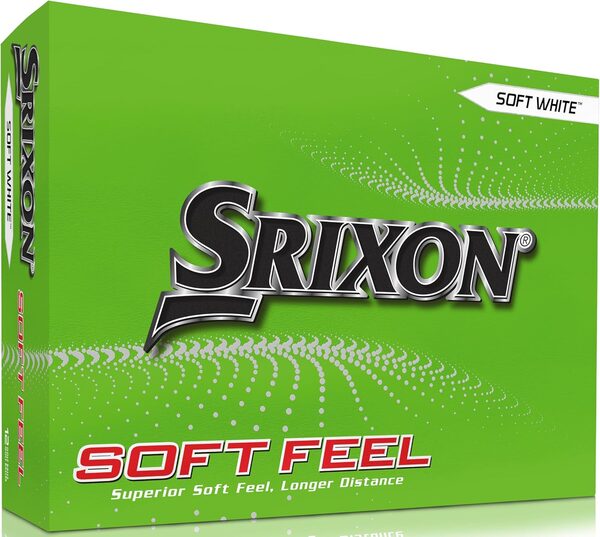
Srixon Soft Feel
The best all-around performer. Slightly firmer than ultra-soft options but with noticeably better greenside performance.
~$23/dozen
The Srixon Soft Feel sits at around 60 compression, which puts it at the higher end of the “low compression” spectrum. That makes it ideal for golfers in the 75-90 mph driver speed range — fast enough to compress a slightly firmer ball, but not so fast that they need a tour-level construction.
What separates the Soft Feel from ultra-soft competitors is its greenside performance. The slightly firmer cover and 338-dimple pattern give it a more responsive feel on chips and pitches. You won’t mistake it for a Pro V1 around the greens, but it’s a clear step up from the 30-compression ultra-softs.
Off the tee, the Soft Feel generates impressive distance with a mid-high trajectory. It’s one of the longer balls in this category. Srixon has been refining this ball for years, and it shows — the consistency from ball to ball is excellent.
Pros
- Best greenside feel in the low-compression category
- Excellent distance with a mid-high trajectory
- Great consistency from ball to ball
- 338-speed dimple pattern for stable flight
- Available in white, yellow, and orange
Cons
- At 60 compression, may be too firm for very slow swingers (under 70 mph)
- Not as soft as the Supersoft or Duo Soft+ on full shots
- Less distance gain compared to lower compression balls for the slowest swingers
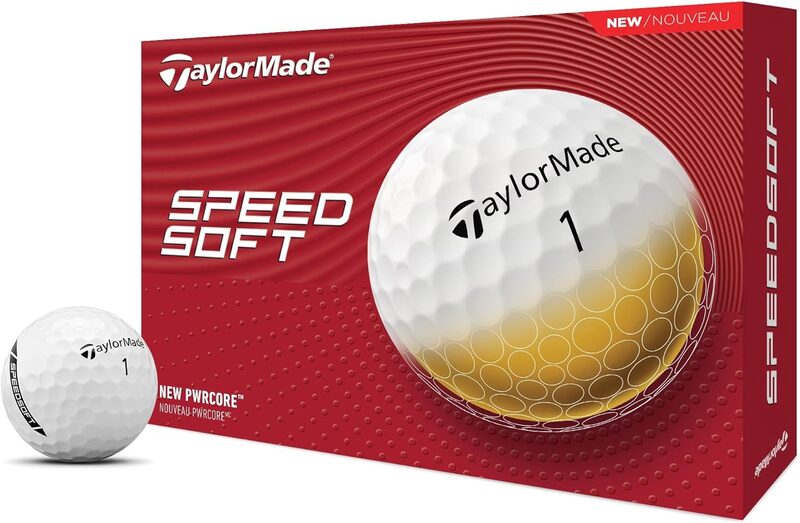
TaylorMade Soft Response
Engineered for distance. If extra yards off the tee are your top priority, the Soft Response delivers.
~$25/dozen
TaylorMade built the Soft Response for one thing above all else: distance for moderate swingers. At approximately 50 compression, it sits in a sweet spot that works well for the 75-85 mph driver speed range.
The low-compression core is designed to reduce driver spin — one of the biggest distance killers for slower swingers. Less spin means a flatter, more penetrating trajectory that rolls out after landing. In our research, golfers switching from high-compression balls to the Soft Response consistently reported 5-12 extra yards off the tee.
The ionomer cover provides good durability — you won’t scuff it up on one cartpath bounce like some ultra-soft balls. The feel is a nice middle ground: soft enough to be comfortable, firm enough that it doesn’t feel hollow on iron shots.
Pros
- Optimized for maximum distance at slow-to-moderate speeds
- Low driver spin for a straighter, longer ball flight
- Durable ionomer cover
- Balanced feel — not too soft, not too firm
- TaylorMade brand quality and consistency
Cons
- Greenside feel is average — not a spin machine
- Limited color options
- Slightly pricier than some competitors
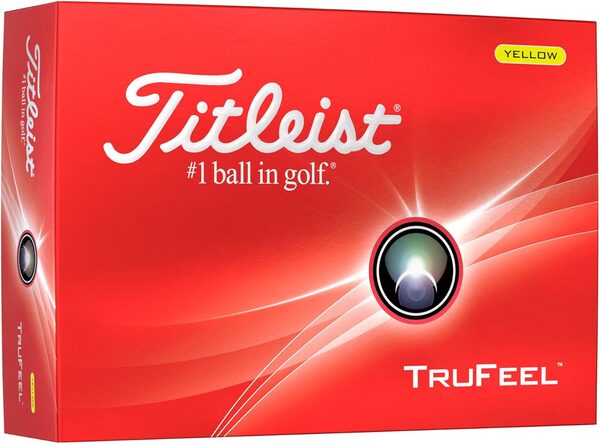
Titleist TruFeel
Titleist’s softest ball. If playing a Titleist matters to you but Pro V1 is overkill, this is your entry point.
~$24/dozen
Let’s be honest — a lot of golfers want to play a Titleist. The brand carries weight, and pulling a Titleist out of your bag just feels right. The TruFeel is Titleist’s softest and lowest-compression offering, sitting at approximately 45 on the compression scale.
The TruTouch core delivers a genuinely soft feel at impact, and the 376-dimple tetrahedral design promotes accuracy and a consistent flight. Titleist’s quality control is among the best in the business, so you can trust that every ball in the box performs identically.
Compared to the Supersoft and Duo Soft+, the TruFeel has a slightly firmer, more responsive feel. Some golfers prefer this — it still compresses easily at slow speeds, but it doesn’t feel as “squishy” on putts and chips. If you’ve tried ultra-soft balls and felt like you lost feedback on the greens, the TruFeel is worth a look.
Pros
- Titleist quality and consistency
- Soft but responsive feel — not mushy
- 376-dimple design for accurate flight
- Good distance for a soft ball
- Available in white, yellow, and red
Cons
- At 45 compression, not as soft as the Supersoft or Duo Soft+
- May not provide enough compression benefit for very slow swingers
- Slightly less distance than the most aggressive low-compression balls
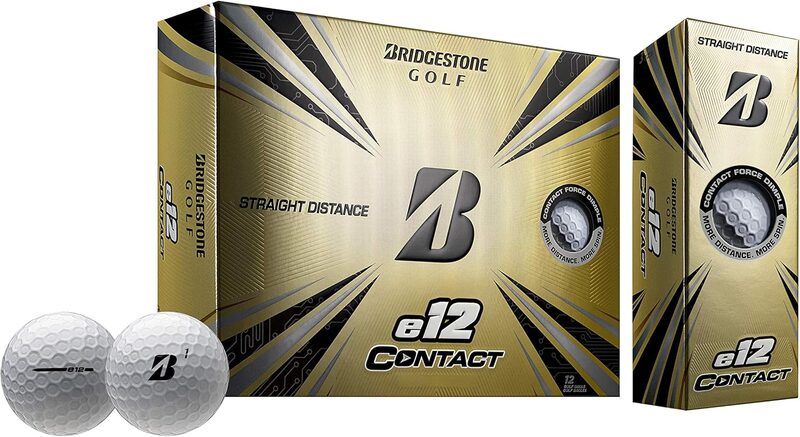
Bridgestone e12 Contact
Bridgestone’s Contact Force dimple technology creates 46% more surface contact at impact for straighter shots and better energy transfer.
~$28/dozen
The Bridgestone e12 Contact takes a different approach to helping slow swingers. Instead of just going ultra-soft, Bridgestone focused on maximizing contact between the ball and clubface. Their Contact Force dimple design uses a raised center in each dimple that creates 46% more surface area touching the clubface at impact.
More surface contact means better energy transfer and less sidespin — which translates to straighter shots. For golfers who fight a slice or hook, this is a meaningful advantage that goes beyond compression alone.
At approximately 50 compression and a 3-piece construction, the e12 Contact is also the most “premium” feeling ball on this list. The extra layer in the construction gives it better greenside control than most 2-piece competitors. If you’re willing to spend a few extra dollars per dozen, the e12 Contact offers a noticeable upgrade in overall performance.
Pros
- Contact Force dimples promote straighter ball flight
- 3-piece construction for better greenside feel
- 50 compression — works for 75-90 mph swingers
- Reduces sidespin for slicers and hookers
- Available with AlignXL alignment mark
Cons
- Most expensive ball on this list at ~$28/dozen
- Not as soft as the Supersoft or Duo Soft+
- The “Contact Force” benefit is hard to feel — it’s more about results than sensation
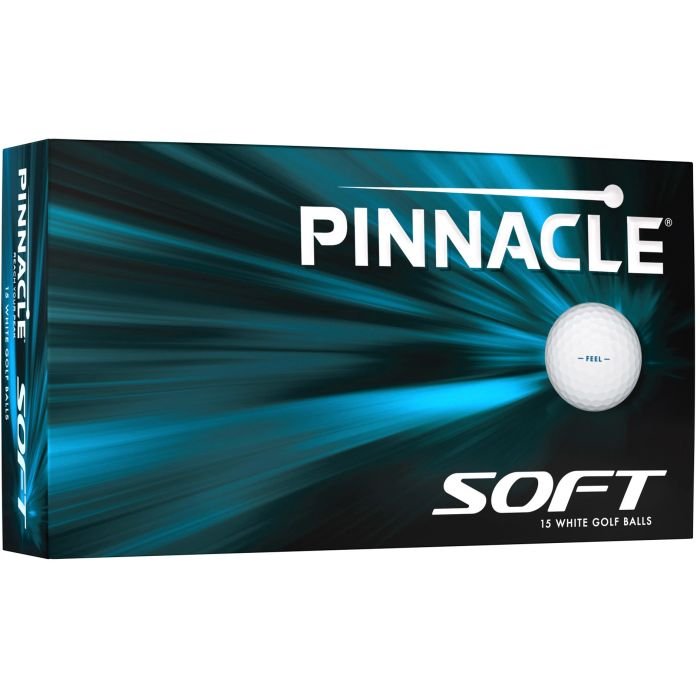
Pinnacle Soft
The best bang for your buck. Under $1.50 per ball with solid performance for recreational golfers.
~$18/dozen
If you’re losing 3-4 balls a round (no judgment — we’ve all been there), spending $25+ per dozen stings. The Pinnacle Soft costs roughly $18 per dozen, making it the most affordable ball on this list by a significant margin.
At approximately 50 compression with a 2-piece ionomer construction, the Pinnacle Soft doesn’t do anything fancy. It just does the basics well: soft feel, decent distance, and a straight-enough flight for recreational play. The 332-dimple icosahedral pattern promotes a reliable trajectory with minimal side deviation.
Is it as refined as the Callaway Supersoft? No. Will you notice the difference on 80% of your shots? Probably not. If budget is a real consideration — and for many golfers it should be — the Pinnacle Soft lets you play a proper low-compression ball without wincing every time one splashes in the water.
Pros
- Best price in the low-compression category
- Solid distance for a budget ball
- Soft feel that punches above its weight
- Durable cover — holds up to cart paths and rough
- Available in 15-ball packs for even better value
Cons
- Short-game feel is basic
- Not as long as the Supersoft or Soft Response off the tee
- Limited color options
How to Choose the Right Ball for Your Swing Speed
Know Your Swing Speed
If you don’t know your driver swing speed, here’s a quick estimate based on your typical driving distance:
- Under 180 yards total: Under 70 mph — play the Wilson Duo Soft+ or Callaway Supersoft
- 180–210 yards total: 70-80 mph — play the Callaway Supersoft or TaylorMade Soft Response
- 210–240 yards total: 80-90 mph — play the Srixon Soft Feel or Titleist TruFeel
- 240+ yards total: 90+ mph — you might not need a low-compression ball
Compression vs. Feel vs. Price
The “best” ball is the one that matches your speed, feels good to you, and fits your budget. Don’t overthink it. If you’re losing 3+ balls a round, buy the cheapest ball that matches your compression needs and invest the savings in lessons. If you play a clean round and rarely lose one, it’s worth stepping up to a ball with better greenside performance.
For more ball recommendations, check out our Best Golf Balls for Beginners guide and our full Golf Ball Compression Chart.
Frequently Asked Questions
If your driver swing speed is under 85 mph, look for golf balls with a compression rating between 30 and 60. Under 75 mph, aim for 40 or below (like the Wilson Duo Soft+ at 29 or Callaway Supersoft at 35). Between 75-85 mph, anything in the 40-60 range works well. The goal is to choose a ball that your swing can fully compress — that’s when you get maximum distance and the best feel.
Yes — if your current ball is too hard for your swing speed. Switching from a high-compression ball (like a Pro V1 at ~90 compression) to a low-compression ball (like a Supersoft at ~35 compression) typically adds 5-15 yards off the tee for golfers with driver speeds under 85 mph. The gain comes from better energy transfer: a softer ball compresses fully at your speed, storing and releasing more energy. If you’re already playing a low-compression ball, switching to a different low-compression ball won’t make a dramatic difference.
Absolutely. Most beginners have slower swing speeds, which makes low-compression balls ideal. They launch higher (easier to get airborne), travel farther (better energy transfer), and feel softer (more forgiving on mishits). Plus, many low-compression balls are affordable, which matters when you’re losing a lot of balls as you learn. The Callaway Supersoft and Pinnacle Soft are both excellent beginner choices. See our Best Golf Balls for Beginners guide for more options.
The Callaway Supersoft and Wilson Duo Soft+ are the two best options for most senior golfers. Both have ultra-low compression that maximizes distance at slower swing speeds. The Supersoft is the better all-around performer, while the Duo Soft+ (at 29 compression) is the best for golfers with very slow swings. If you’re a senior who still swings at 85+ mph, you might prefer the Srixon Soft Feel or Titleist TruFeel for their slightly firmer feel and better greenside control.
Generally, yes. Most low-compression balls use a 2-piece construction with an ionomer cover, which generates less greenside spin than a 3- or 4-piece urethane-covered ball. This means your chips and pitches won’t check and stop as quickly. For most recreational golfers, this trade-off is worth it because the distance gains off the tee matter more than greenside spin. If you want the best balance of low compression and short-game spin, the Bridgestone e12 Contact (3-piece) or Srixon Soft Feel are your best options.
If your swing speed is fast (90+ mph) and you play an ultra-low compression ball, you could actually lose distance and control. Over-compressing a soft ball creates too much spin and can cause a ballooning ball flight. But if your swing speed is under 85 mph, it’s nearly impossible to “over-compress” any ball on this list. Err on the side of softer — the penalty for a slightly-too-soft ball is minimal, while the penalty for a too-firm ball is significant lost distance.
More Buying Guides
{
“@context”: “https://schema.org”,
“@type”: “ItemList”,
“name”: “Best Golf Balls for Slow Swing Speed 2026”,
“description”: “Top low compression golf balls for seniors, beginners, and slow swing speed golfers — tested and reviewed.”,
“numberOfItems”: 7,
“itemListElement”: [
{
“@type”: “ListItem”,
“position”: 1,
“item”: {
“@type”: “Product”,
“name”: “Callaway Supersoft Golf Balls”,
“description”: “Best overall low compression golf ball with 35 compression for slow swing speeds.”,
“brand”: {“@type”: “Brand”, “name”: “Callaway”},
“offers”: {
“@type”: “Offer”,
“price”: “24.99”,
“priceCurrency”: “USD”,
“availability”: “https://schema.org/InStock”,
“url”: “https://www.amazon.com/dp/B0DQRFXMTV?tag=grumgoph09-20”
}
}
},
{
“@type”: “ListItem”,
“position”: 2,
“item”: {
“@type”: “Product”,
“name”: “Wilson Duo Soft+ Golf Balls (2025)”,
“description”: “Lowest compression golf ball on the market at 29 compression — ideal for the slowest swing speeds.”,
“brand”: {“@type”: “Brand”, “name”: “Wilson”},
“offers”: {
“@type”: “Offer”,
“price”: “22.99”,
“priceCurrency”: “USD”,
“availability”: “https://schema.org/InStock”,
“url”: “https://www.amazon.com/dp/B003RPXXMM?tag=grumgoph09-20”
}
}
},
{
“@type”: “ListItem”,
“position”: 3,
“item”: {
“@type”: “Product”,
“name”: “Srixon Soft Feel Golf Balls”,
“description”: “Best all-around low compression ball with superior greenside performance at 60 compression.”,
“brand”: {“@type”: “Brand”, “name”: “Srixon”},
“offers”: {
“@type”: “Offer”,
“price”: “22.99”,
“priceCurrency”: “USD”,
“availability”: “https://schema.org/InStock”,
“url”: “https://www.amazon.com/dp/B0DFMQ68N7?tag=grumgoph09-20”
}
}
},
{
“@type”: “ListItem”,
“position”: 4,
“item”: {
“@type”: “Product”,
“name”: “TaylorMade Soft Response Golf Balls”,
“description”: “Best for distance with 50 compression and low driver spin for slow swing speeds.”,
“brand”: {“@type”: “Brand”, “name”: “TaylorMade”},
“offers”: {
“@type”: “Offer”,
“price”: “24.99”,
“priceCurrency”: “USD”,
“availability”: “https://schema.org/InStock”,
“url”: “https://www.amazon.com/dp/B0FM7BXX31?tag=grumgoph09-20”
}
}
},
{
“@type”: “ListItem”,
“position”: 5,
“item”: {
“@type”: “Product”,
“name”: “Titleist TruFeel Golf Balls”,
“description”: “Titleist’s softest ball at 45 compression with premium consistency and responsive feel.”,
“brand”: {“@type”: “Brand”, “name”: “Titleist”},
“offers”: {
“@type”: “Offer”,
“price”: “23.99”,
“priceCurrency”: “USD”,
“availability”: “https://schema.org/InStock”,
“url”: “https://www.amazon.com/dp/B0CP9RKVF7?tag=grumgoph09-20”
}
}
},
{
“@type”: “ListItem”,
“position”: 6,
“item”: {
“@type”: “Product”,
“name”: “Bridgestone e12 Contact Golf Balls”,
“description”: “3-piece ball with Contact Force dimple technology for straighter shots at 50 compression.”,
“brand”: {“@type”: “Brand”, “name”: “Bridgestone”},
“offers”: {
“@type”: “Offer”,
“price”: “27.99”,
“priceCurrency”: “USD”,
“availability”: “https://schema.org/InStock”,
“url”: “https://www.amazon.com/s?k=View&tag=grumgoph09-20”
}
}
},
{
“@type”: “ListItem”,
“position”: 7,
“item”: {
“@type”: “Product”,
“name”: “Pinnacle Soft Golf Balls”,
“description”: “Best budget low compression golf ball at under $18 per dozen.”,
“brand”: {“@type”: “Brand”, “name”: “Pinnacle”},
“offers”: {
“@type”: “Offer”,
“price”: “17.99”,
“priceCurrency”: “USD”,
“availability”: “https://schema.org/InStock”,
“url”: “https://www.amazon.com/dp/B0GP58M65Y?tag=grumgoph09-20”
}
}
}
]
}